 General Health and Nutrition

The foods you eat when you are pregnant are the main source of nutrients for you and your growing baby. Making healthy food choices every day will help you stay healthy and give your baby what he or she needs to develop.
Nutrition and Physical Fitness
Depending on your nutrition before pregnancy, you may need more protein, iron, calcium, and folic acid than you did before pregnancy, and you may need more calories. Sensible, balanced meals combined with regular physical fitness is still the best recipe for good health during your pregnancy. MyPlate.gov can show you what to eat as well as how much you need to eat from each food group. Talk to your doctor if you have special diet needs for any reason.
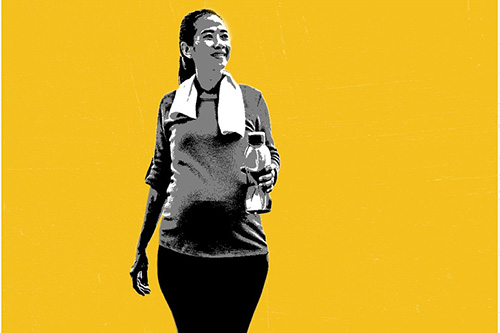
Fitness goes hand in hand with eating right to maintain your physical health and well-being during pregnancy. Pregnant or not, physical fitness helps keep the heart, bones, and mind healthy. Healthy pregnant women should get at least 2 hours and 30 minutes of moderate-intensity aerobic activity a week. If you regularly engage in vigorous-intensity aerobic activity or high amounts of activity, you can keep up your activity level as long as your health doesn't change, and you talk to your doctor about your activity level throughout your pregnancy.
For more information, check out the following resources:
- Nutrition During Pregnancy (ACOG):
https://www.acog.org/womens-health/faqs/nutrition-during-pregnancy - Exercise During Pregnancy (ACOG):
https://www.acog.org/womens-health/faqs/exercise-during-pregnancy - MyPlate Life Stages Pregnancy and Breastfeeding:
https://www.myplate.gov/life-stages/pregnancy-and-breastfeeding
Vitamins and Minerals
In addition to making healthy food choices, ask your doctor about taking a prenatal vitamin and mineral supplement every day to be sure you are getting enough of the nutrients your baby needs. When you are pregnant, you need more folic acid, iron, calcium, vitamin D, vitamin B12, and vitamin A, but keep in mind that taking too much of a supplement can be harmful. For example, very high levels of vitamin A can cause birth defects and some supplements contain much more of this vitamin than needed.
For more information, please visit:
- Pregnancy Vitamins and Nutrients:
https://americanpregnancy.org/healthy-pregnancy/pregnancy-health-wellness/pregnancy-vitamins-nutrients/
Fluid Intake
Water is important for our bodies. When you are pregnant, your body needs even more water to stay hydrated and support a growing baby.
How Much Water Pregnant Women Should Drink
The American College of Obstetricians and Gynecologists recommends that during pregnancy you should drink 8 to 12 cups (each cup is 8 ounces; total is 64 to 96 ounces) of water every day. Water also helps prevent constipation, hemorrhoids, excessive swelling, and urinary tract or bladder infections.
Risks of Not Drinking Enough Water
Not getting enough water can lead to premature or early contractions. A good way to tell if your fluid intake is okay is if your urine is pale yellow or colorless and you rarely feel thirsty. Thirst is a sign that your body is on its way to dehydration. Don't wait until you feel thirsty to drink.
For more information, please visit:
- How much water should I drink during pregnancy? (ACOG):
https://www.acog.org/womens-health/experts-and-stories/ask-acog/how-much-water-should-i-drink-during-pregnancy#:~:text=During%20pregnancy%20you%20should%20drink,helps%20waste%20leave%20the%20body.
Food Safety
Most foods are safe for you and your baby during pregnancy, but you will need to use caution or avoid eating certain foods. Clean, handle, cook, and chill food properly to prevent foodborne illness, including listeria and toxoplasmosis:
- Wash hands with soap after touching soil or raw meat.
- Keep raw meats, poultry, and seafood from touching other foods or surfaces.
- Cook meat completely.
- Wash produce before eating.
- Wash cooking utensils with hot, soapy water.
For more information, please visit:
- Safer Food Choices for Pregnant Women (CDC):
https://www.cdc.gov/food-safety/foods/pregnant-women.html
Caffeine
Moderate amounts of caffeine appear to be safe during pregnancy. Moderate means less than 200 mg of caffeine per day, which is the amount in about 12 ounces of coffee. Most caffeinated teas and soft drinks have much less caffeine. Some studies have shown a link between higher amounts of caffeine and miscarriage and preterm birth. But there is no solid proof that caffeine causes these problems. The effects of too much caffeine are unclear. Ask your doctor whether drinking a limited amount of caffeine is okay for you.
For more information, please visit:
- How much coffee can I drink while I’m pregnant? (ACOG):
https://www.acog.org/womens-health/experts-and-stories/ask-acog/how-much-coffee-can-i-drink-while-pregnant
Medicines and Herbs
You and your baby are connected. The medicines you use, including over-the-counter, herbal, and prescription drugs or supplements, might get into your baby's body, too.
Many Medicines and Herbs Not Tested
Many medicines and herbs are known to cause problems during pregnancy, including birth defects. For some medicines, we don't know that much about how they might affect pregnancy or the developing fetus. This is because medicines are rarely tested on pregnant women for fear of harming the baby.
Ask Your Doctor About Risks
You may wonder if it's safe to use medicines during pregnancy. There is no clear-cut answer to this question. Your doctor can help you make the choice whether to use a medicine. Labels on prescription and over-the-counter drugs have information to help you and your doctor make this choice. Always speak with your doctor before you start or stop any medicine. Not using medicine that you need may be more harmful to you and your baby than using the medicine.
Weighing benefits and risks
When deciding whether to use a medicine in pregnancy, you and your doctor need to talk about the medicine's benefits and the risks. Benefits –what are the good things the medicine can do for me and my growing baby? Risks –what are the ways the medicine might harm me or my growing baby?
Using herbal or dietary supplements and other ‘natural’ products
You might think herbs are safe because they are "natural." But, except for some vitamins, little is known about using herbal or dietary supplements while pregnant. Some herbal remedy labels claim they will help with pregnancy. But, most often there are no good studies to show if these claims are true or if the herb can cause harm to you or your baby. Also, some herbs that are safe when used in small amounts as food might be harmful when used in large amounts as medicines. So, talk with your doctor before using any herbal or dietary supplement or natural product.
For more information, check out the resources on this page:
- Pregnancy and medicines (OWH):
https://www.womenshealth.gov/a-z-topics/pregnancy-and-medicines
 Substance Use During Pregnancy
Using substances like nicotine, alcohol, cannabis, and other illicit drugs during pregnancy can harm the health of your baby. So can using prescription drugs in a way other than prescribed. These substances cross the placenta and reach your baby. This can put your baby at risk for such problems as stillbirth, low birth weight, birth defects, behavioral problems, and developmental delays. It is never too late to stop using alcohol or drugs, and stopping will improve the baby’s health and well-being.
Nicotine Use
Smoking cigarettes / vaping or using nicotine products (such as chewing tobacco or nicotine pouches) harms your health and could also affect the health of your baby. Smoking can cause cancer and heart disease in people who smoke, and smoking during pregnancy increases the risk of low birth weight.
Smoking Risks
Low birth weight babies are at higher risk of health problems shortly after birth. Also, some studies have linked low birth weight with a higher risk of health problems later in life, such as high blood pressure and diabetes. Women who smoke during pregnancy are more likely to have a miscarriage and to have a baby born with cleft lip or palate, two types of birth defects. Also, smoking during or after pregnancy or exposure to secondhand smoke can put your baby at greater risk of sudden infant death syndrome (SIDS).
Get Help Quitting Smoking
Parents who smoke have many reasons to quit smoking. Take care of your health and your baby's health: Ask your doctor about ways to help you quit during pregnancy. Intensive counseling has been shown to increase the chance of quitting successfully. Quitting smoking is hard, but you can do it with help!
For more information, please visit:
- Smoking, Pregnancy, and Babies (CDC):
https://www.cdc.gov/tobacco/campaign/tips/diseases/pregnancy.html- E-Cigarettes and Pregnancy (CDC):
https://www.cdc.gov/reproductivehealth/maternalinfanthealth/substance-abuse/e-cigarettes-pregnancy.htm- Smoking During Pregnancy (CDC):
https://www.cdc.gov/tobacco/about/cigarettes-and-reproductive-health.html- Pregnancy & Motherhood (CDC):
https://women.smokefree.gov/pregnancy-motherhood
Alcohol Use
There is no known safe amount of alcohol use during pregnancy. Alcohol use during pregnancy can cause miscarriage, stillbirth, and a range of lifelong disabilities known as fetal alcohol spectrum disorders (FASDs), characterized by numerous physical, behavioral, and intellectual disabilities.
For more information, please visit:
- Alcohol Use During Pregnancy (CDC):
https://www.cdc.gov/ncbddd/fasd/alcohol-use.html
Cannabis (Marijuana) or Cannabinoid Products
Exposure to delta-9-THC, the psychoactive chemical in cannabis, during pregnancy is associated with risks to newborn health such as preterm birth and lower birth weight, and some studies link such exposure to changes in brain development.
Delta-8 and CBD
Newer products like delta-8-THC have not yet been studied for their effects during pregnancy, but these cannabinoids are chemically similar to delta-9-THC and produce similar biological effects. Although more research is needed to better understand how CBD may affect you and your baby during pregnancy, studies in animals show that high doses have negative effects on developing fetuses. It is recommended that pregnant women do not use cannabis or cannabinoid products of any kind (such as smoking, vaping, or edibles).
For more information, please check out these resources:
- What You Need to Know About Marijuana Use and Pregnancy (CDC):
https://www.cdc.gov/cannabis/health-effects/pregnancy.html- What You Should Know About Using Cannabis, Including CBD, When Pregnant or Breastfeeding (FDA):
https://www.fda.gov/consumers/consumer-updates/what-you-should-know-about-using-cannabis-including-cbd-when-pregnant-or-breastfeeding#:~:text=FDA+strongly+advises+against+the,during+pregnancy+or+while+breastfeeding.&text=Cannabis+and+Cannabis-derived+products,products+appearing+all+the+time
Fentanyl Use
What is Fentanyl?
Fentanyl is a synthetic opioid that is sometimes used during surgery or to treat severe pain. Fentanyl (or similar drugs) can also be illegally manufactured and sold or used to make other street drugs more potent.
Risks of Fentanyl Use
In recent years, drug-related overdoses have increased with more than 100,000 people dying every year. Most of these are due to fentanyl sold illegally, alone or in combination with other substances, especially cocaine, methamphetamine, and fake pills that resemble prescribed medicines. Fentanyl is very potent and even small amounts can lead to a fatal overdose. Naloxone can reverse fentanyl overdoses if administered quickly and at a high enough dose.
Fentanyl and Pregnancy
Fentanyl use during pregnancy can increase the risk for pregnancy-related problems and may increase neonatal opioid withdrawal symptoms (NOWS) in babies. To find out more about how to reduce your risks of accidentally being exposed to fentanyl and fentanyl overdose visit harmreduction.org.
For more information, please visit:
- Fentanyl (NIDA):
https://nida.nih.gov/research-topics/fentanyl- HBCD Fentanyl Resources page:
https://hbcdstudy.org/families/resources/fentanylresources/
Other Drugs
Many people who use illegal drugs also use tobacco and alcohol. So, it’s not always easy to tell the effects of one drug from that of alcohol, tobacco, or other drugs. We do know that using illegal drugs during pregnancy is dangerous. Babies born to someone who regularly use drugs such as cocaine, heroin, and methamphetamine often go through withdrawal. People who inject drugs are at higher risk of getting HIV, which can be passed to baby. Some studies suggest that the effects of drug use during pregnancy might not be seen until later in childhood.
Getting Help for Alcohol or Drug Use
If you drink alcohol or use drugs and cannot quit, talk to your doctor right away. Treatment programs can help you with substance use disorders. To find help near you, go to the substance use treatment facility locator at FindTreatment.gov or call SAMHSA’s National Helpline at 1-800-662-HELP (4357), this is a free, confidential, 24/7, 365-day-a-year treatment referral and information service (in English and Spanish) for individuals and families facing mental and/or substance use disorders.
For more information, check out the resources on these pages: SAMHSA’s National Helpline and FindTreatment.gov.
 Environment and Travel
Travel
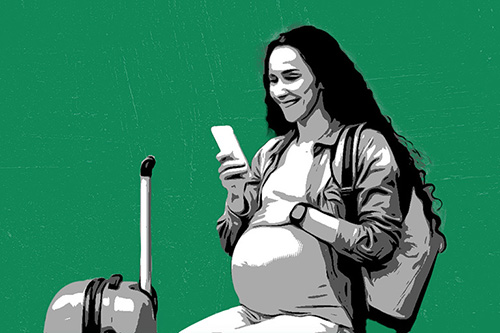
Everyday life doesn't stop once you are pregnant. Most of the time you can continue with their usual routine and activity level. That means going to work, running errands, and for some, traveling away from home.
Choose Safe Destinations
Talk to your doctor before making any travel decisions that will take you far from home. Ask if any health conditions you might have make travel during pregnancy unsafe. Also consider the destination. Is the food and water safe? Will you need immunizations before you go? Is there good medical care available in the event of an emergency? Will your health insurance cover medical care at your destination?
Avoid Sitting Too Long
Avoid sitting for long periods during travel. Prolonged sitting can affect blood flow in your legs. Occasional air travel is safe for most pregnant women, and most airlines will allow them to fly up to 36 weeks of pregnancy. Bring a copy of your medical record and find out about medical care at your destination so you will be prepared in the event of an emergency.
Use Seatbelts
Buckle up! Wearing a seatbelt during car and air travel is safe while pregnant. The lap strap should go under your belly, across your hips. The shoulder strap should go in the center of your chest and to the side of your belly. Make sure it fits snugly. If you suspect a problem with your pregnancy during your trip, don't wait until you come home to see your doctor. Seek medical care right away.
For more information, check out the resources on this page:
- Travel During Pregnancy (ACOG) - https://www.acog.org/womens-health/faqs/travel-during-pregnancy
Environmental Risks
The environment is everything around us wherever we are - at home, at work, or outdoors. Although you don't need to worry about every little thing you breathe in or eat, it's smart to avoid exposure to substances that might put your pregnancy or baby's health at risk. During pregnancy, avoid exposure to:
- Lead - found in some water and paints, mainly in homes built before 1978.
- Mercury – the harmful form is found mainly in large, predatory fish.
- Arsenic - high levels can be found in some well water.
- Pesticides - both household products and agricultural pesticides.
- Solvents - such as degreasers and paint strippers and thinners.
- Cigarette smoke.
Keep in mind: We don't know how much exposure can lead to problems, such as miscarriage or birth defects. That is why it's best to avoid or limit your exposure as much as possible.
Environmental Risks in the Workplace
In addition, there may be other environmental risks that are not listed above. If you are exposed to chemicals in the workplace, talk to your doctor and your employer about what you can do to lower your exposure. Certain industries, such as dry cleaning, manufacturing, printing, and agriculture, involve use of toxins that could be harmful.
Concerned about Water Quality?
If you are concerned about the safety of your drinking water, call your health department or water supplier to ask about the quality of your tap water or how to have your water tested. Or call the Environmental Protection Agency's Safe Drinking Water Hotline at (800) 426-4791.
For more information, check out the resources on this page:
- Environmental Hazards and Toxins (National Partnership for Women and Families) - https://nationalpartnership.org/childbirthconnection/planning-pregnancy/environmental-hazards-toxins/
 Abusive Relationships
Abusive relationships can begin or increase during pregnancy and can harm you and your baby. Those who are abused often don’t get the prenatal care they and their babies need. This can lead to physical and mental health conditions before and after pregnancy and preterm birth, low birthweight, stillbirth, and other problems for babies. Now is a good time to think about the safety and well-being of you and your baby.
Get Help Leaving an Abusive Relationship
It's possible to leave an abusive relationship and prenatal exams offer a good chance to reach out for help. If you are in an abusive relationship, let pregnancy and your baby’s safety prompt you to act now. If you're a victim of abuse or violence at the hands of someone you know or love, or you are recovering from an assault by a stranger, you and your baby can get immediate help and support.
- The National Domestic Violence Hotline can be reached 24 hours a day, 7 days a week at 800-799-SAFE (7233) and 800-787-3224 (TTY). Spanish speakers are available. When you call, you will first hear a recording and may have to hold. Hotline staff offer crisis intervention and referrals. If requested, they can connect you to shelters and can send out written information.
- The National Sexual Assault Hotline can be reached 24 hours a day, 7 days a week at 800-656-4673. When you call, you will hear a menu and can choose #1 to talk to a counselor. You will then be connected to a counselor in your area who can help you. You can also visit the National Sexual Assault Online Hotline.
 When to Call the Doctor
When you are pregnant, do not hesitate to call your doctor or midwife if something is bothering or worrying you. Sometimes physical changes can be signs of a problem. The reasons listed below may not be the only reasons to call your doctor. Call your doctor or midwife as soon as you can if you:
- Are bleeding or leaking fluid from the vagina
- Have sudden or severe swelling in the face, hands, or fingers
- Get severe or long-lasting headaches
- Have discomfort, pain, or cramping in the lower abdomen
- Have a fever or chills
- Are vomiting or have persistent nausea
- Feel discomfort, pain, or burning with urination
- Have problems seeing or blurred vision
- Feel dizzy
- Suspect your baby is moving less than normal after 28 weeks of pregnancy (if you count less than 10 movements within 2 hours).
- Have thoughts of harming yourself or your baby

